
Single-Ply Roofing Services in San Jose, CA: TPO, PVC, and EPDM Membrane Systems
A single-ply roofing system in San Jose is a flexible sheet membrane manufactured from synthetic polymers (TPO, PVC, or EPDM) that is mechanically fastened or adhered over rigid insulation to deliver high-tensile waterproofing. Roofing San Jose installs commercial single-ply roofing from Carlisle SynTec, GAF Commercial, and Mule-Hide, featuring automated robotic hot-air seam welding and Title 24 cool roof certification.
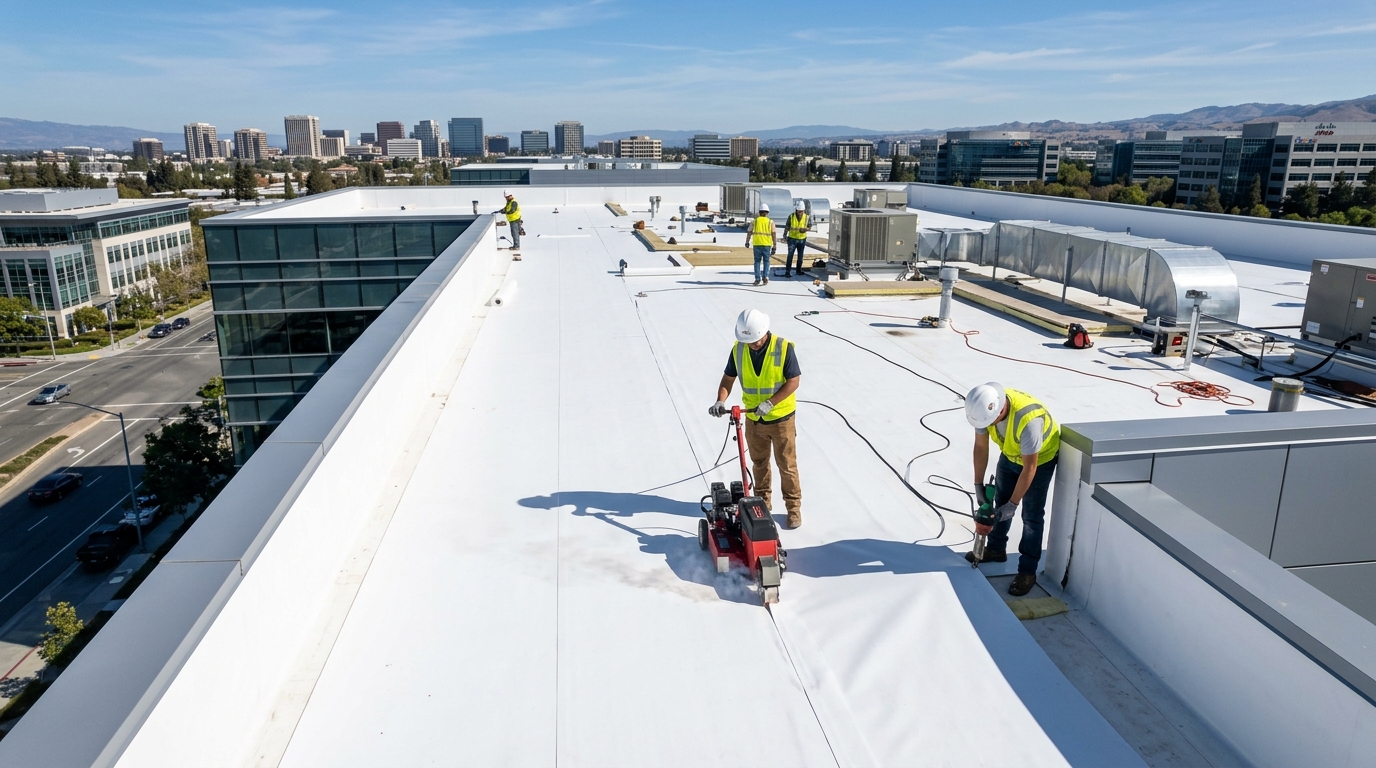
High-Efficiency Single-Ply Solutions in San Jose
Engineered specifically for residential and commercial building requirements in San Jose and Santa Clara County.
Thermoplastic Polyolefin (TPO) Single-Ply Systems
TPO blends ethylene propylene rubber with polypropylene, reinforced with an internal polyester scrim. It offers extreme resistance to ozone and ultraviolet breakdown without containing plasticizers. TPO membranes reflect solar heat, remain flexible through severe temperature fluctuations, and form permanent heat-welded seams.
Polyvinyl Chloride (PVC) Chemical-Resistant Membranes
For biotechnology manufacturing plants, commercial restaurants, food service facilities, and medical campuses, PVC is the premier single-ply choice. PVC membranes are chemically inert against animal fats, cooking oils, and industrial chemical exhaust while offering inherent Class A fire resistance.
Ethylene Propylene Diene Monomer (EPDM) Synthetic Rubber
EPDM is an elastomeric synthetic rubber membrane with over 50 years of proven field performance. With exceptional elongation capability, EPDM expands and contracts smoothly across large warehouse roofs, resisting thermal shock and severe hail impact without fracturing.
Silicon Valley Environmental Factors Neutralized by Single-Ply
Silicon Valley microclimates place unique thermal, wind, and seismic stresses on roofing assemblies.
Extreme Solar Ultraviolet Heat and Ozone Degradation
The Climate Stressor: Unshaded commercial flat roofs absorb intense ultraviolet radiation that oxidizes traditional asphalt materials and degrades standard adhesives.
Our Engineering Solution: White TPO and PVC single-ply membranes reflect up to 88 percent of solar rays and feature advanced UV stabilizers that prevent polymer cracking.
Atmospheric Storm Wind Uplift and Parapet Shear
The Climate Stressor: High winter wind gusts funneled across the valley floor create powerful low-pressure suction along roof corners and parapet perimeters.
Our Engineering Solution: We engineer customized fastener spacing schedules and install high-density perimeter induction-weld plates that resist hurricane-force wind uplift.
Rooftop Restaurant and Exhaust Chemical Fallout
The Climate Stressor: Grease and chemical exhausts from commercial kitchen hoods dissolve standard asphalt and degrade rubber membranes within months.
Our Engineering Solution: We install grease-resistant PVC single-ply membrane assemblies that remain impervious to animal fats, cooking oils, and industrial chemicals.
Single-Ply Membrane Performance Specifications
Compare performance metrics, material lifespans, and estimated pricing parameters for San Jose properties.
| Membrane Type | Available Thickness | Seam Technology | Chemical Resistance | Installed Cost / Sq Ft |
|---|---|---|---|---|
| TPO Single-Ply | 60 Mil & 80 Mil | Hot-Air Welded (950°F) | Moderate | $6.50 - $9.50 |
| PVC Single-Ply | 50 Mil & 80 Mil | Hot-Air Welded (950°F) | Superior (Oils & Chemicals) | $8.50 - $13.50 |
| EPDM Rubber (Black) | 60 Mil & 90 Mil | Seam Tape & Primer | Moderate | $7.50 - $11.00 |
| FleeceBACK TPO / PVC | 115 to 135 Mil Total | Adhered Foam Adhesive | High Impact Resistance | $9.50 - $14.50 |
Automated Robotic Hot-Air Seam Welding at 950°F
Hand welding long commercial seams can lead to inconsistent temperatures. We deploy digital robotic hot-air welders that fuse overlapping membrane sheets at over 900 degrees Fahrenheit, creating permanent molecular bonds stronger than the membrane itself.
Mechanically Attached vs Fully Adhered Systems
We advise facility managers on the optimal attachment method: mechanically attached systems offer rapid, economical installation, while fully adhered assemblies utilizing low-VOC foam adhesives deliver superior wind uplift ratings and quiet installation.
Certified Applicator Status with Top Manufacturers
Our technicians maintain certified master applicator credentials with Carlisle SynTec and GAF Commercial, allowing us to register 20, 25, and 30-year manufacturer No Dollar Limit (NDL) warranty certificates on your building.
Our 5-Stage Single-Ply Project Execution Process
Every project follows strict NRCA technical standards, manufacturer specifications, and City of San Jose building codes.
-
1
Substrate Surface Preparation and Air Barrier
We clean the roof deck, repair metal or concrete deck rust, and install self-adhering vapor retarders to block internal building moisture.
-
2
Rigid Polyiso Insulation Board Attachment
We install dual layers of polyisocyanurate insulation with staggered joints, fastened with heavy screws and plates or low-rise adhesive foam.
-
3
Single-Ply Membrane Layout and Tensioning
We roll out TPO or PVC rolls, allowing sheets to relax in the sun before securing them with specified mechanical or adhesive spacing.
-
4
Robotic Hot-Air Seam Welding and Edge Detailing
Our crews run computerized robotic welders along all lap seams and verify seam strength by physically probing every inch with testing picks.
-
5
Perimeter Termination and Manufacturer Audit
We terminate sheets along parapet walls with heavy clad metal and host a factory technical representative for the final NDL audit.
Continuous Lap Seam Physical Probe Audits
At the start and conclusion of each shift, our quality control inspectors hand-probe every seam with a blunt steel testing tool to detect cold welds or voids before the job is signed off.
Low-VOC Odor-Free Foam Adhesives for Cleanrooms
For sensitive Silicon Valley semiconductor cleanrooms and biotechnology laboratories, we utilize zero-VOC low-rise polyurethane foam adhesives that generate zero chemical fumes or odors.
Prefabricated Clad Metal Edge Flashings
We terminate roof edges using factory-clad galvanized steel flashings that feature a factory-bonded TPO or PVC coating, allowing the membrane to be directly heat-welded to the edge metal for leakproof perimeter security.
Connected Commercial Roofing Solutions
Coordinate your service with complementary structural and weatherproofing upgrades.
Comprehensive Commercial Replacement
For full structural tear-offs and complex low-slope re-roofing, visit our Explore our dedicated Commercial Roof Replacement in San Jose.
Fluid-Applied Restoration Coatings
Extend the life of an existing sound single-ply roof without tear-off with our Explore our dedicated Commercial Roof Coatings in San Jose.
Contact Roofing San Jose today for an on-site structural evaluation, accurate photographic report, and fixed-price written estimate.
Frequently Asked Questions About Single-Ply Roofing in San Jose
Detailed answers to common questions regarding timelines, municipal permits, costs, and materials.
How long does a single-ply TPO roof last in San Jose?
A high-quality 60-mil or 80-mil TPO single-ply roof in San Jose typically lasts between 25 and 30 years when properly installed with hot-air welded seams and inspected semi-annually.
What is the difference between TPO and PVC single-ply roofing?
TPO is an economical rubber-polypropylene blend offering superior solar reflectivity, while PVC contains plasticizers that make it naturally resistant to rooftop animal fats, cooking oils, and harsh industrial chemicals.
How much does a commercial single-ply roof cost in San Jose?
A commercial single-ply roof in San Jose typically costs between $6.50 and $12.50 per square foot installed depending on membrane thickness (60-mil vs 80-mil), insulation R-value, and attachment method.
Can single-ply roofing be installed over an existing flat roof?
Yes, single-ply recovers can often be installed over an existing roof if the building code allows two layers, the existing insulation is dry, and a separation slip-sheet or cover board is installed.
Why are single-ply seams heat-welded instead of glued?
Hot-air welding melts the thermoplastic polymers together at 950 degrees Fahrenheit, creating a fused molecular bond that is significantly stronger and more durable than chemical adhesive glues.
Does single-ply roofing comply with California Title 24 cool roof codes?
Yes, white TPO and PVC single-ply membranes achieve aged Solar Reflectance Index ratings above 90, easily exceeding California Title 24 Part 6 minimum standards of SRI 64.
What thickness of single-ply membrane should I choose?
We recommend a minimum 60-mil thickness for standard commercial buildings, and 80-mil thickness for roofs with heavy HVAC traffic, solar panel arrays, or aggressive chemical exhaust.
What warranties are available for commercial single-ply roofs?
We provide our direct 10-year company workmanship warranty combined with manufacturer No Dollar Limit (NDL) system warranties ranging from 20 to 30 years from Carlisle SynTec and GAF Commercial.